The Birth of a Hidden City
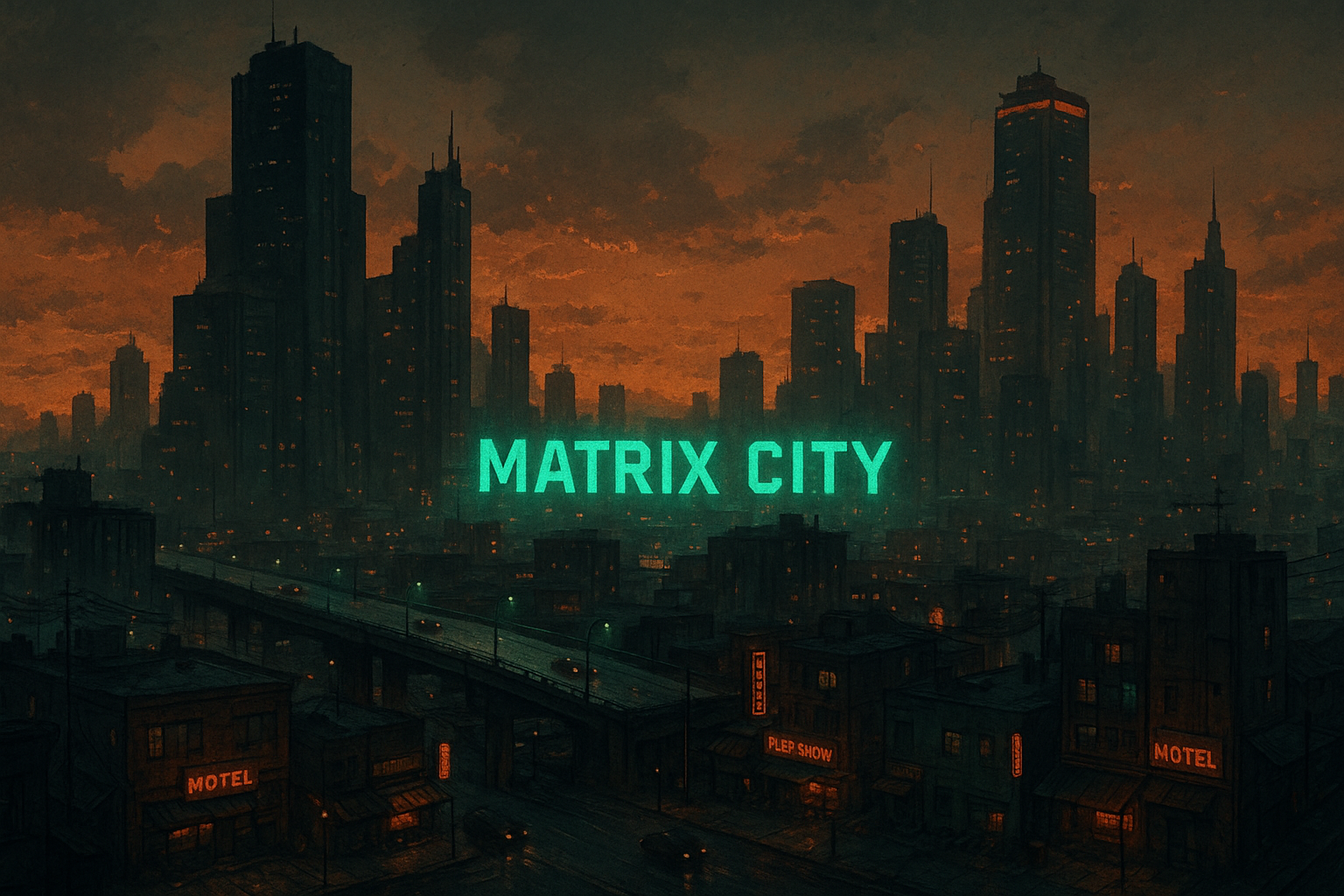
Long before the world recognized its name, the land that would become Matrix City was nothing more than a forgotten coastal settlement a few hours south of San Francisco. Storms swept across abandoned piers, buildings stood half-collapsed along the cliffs, and locals whispered that the government had once used the place for “testing.” No one could prove it, and no one cared enough to try.
Then one day, the Red Devils arrived.
They were not a mythic force, nor supernatural beings—just a ruthless, highly organized syndicate forged from the ashes of older West Coast gangs. Their reputation traveled far ahead of them: violent when provoked, fiercely loyal to their own, and brilliant tacticians beneath the criminal image. The ruins of the forgotten coastal town suited them perfectly. Here, no laws reigned, no mayor searched for votes, and no eyes of Washington watched their movements.
In the beginning, the Red Devils simply wanted a base of operations. But the more they rebuilt, the more the land responded. The broken cabins became workshops. The derelict warehouses transformed into businesses. Docks were repaired, streets re-paved, networks laid. People arrived—some seeking opportunity, some seeking escape, and some simply seeking a place to start over. What had once been a ghost settlement became a living city.
The Red Devils reclaimed the territory, protected it, and unintentionally built something greater than themselves.
That was the first rebirth.
The Discovery
The second rebirth came years later, when strange behavior began sweeping across the city.
Lights flickered with no logical cause. Buildings repaired themselves overnight. People who died in accidents returned walking the next morning with no memory of the event. Sirens went silent during gunfights. Storms appeared and vanished in seconds. The sky glitched—brief, imperceptible flickers—but enough for the keen-eyed to notice.
It wasn’t superstition. It wasn’t hallucination. It was the truth clawing its way to the surface.
A small group of investigators and hackers—some from gangs, some from the city’s growing business scene, and even a few from the newly organized security forces—dug deeper. What they found shattered every assumption the city had ever held.
Matrix City was not organic.
It was not natural.
It was not placed on any official records because, in a sense, it did not exist at all.
Beneath the pavement, behind the walls, beneath the water and sky was code—strings of data shaping reality. Somewhere beyond the coast, the real world watched through wires, using Matrix City as a simulation, a containment space, a controlled experiment.
People were real.
Their lives were real.
Their pain, their joy, their deaths, their triumphs—real.
Only the world was manufactured.
And when the people learned this, everything changed.
The Machine War
The first signs of resistance came subtly.
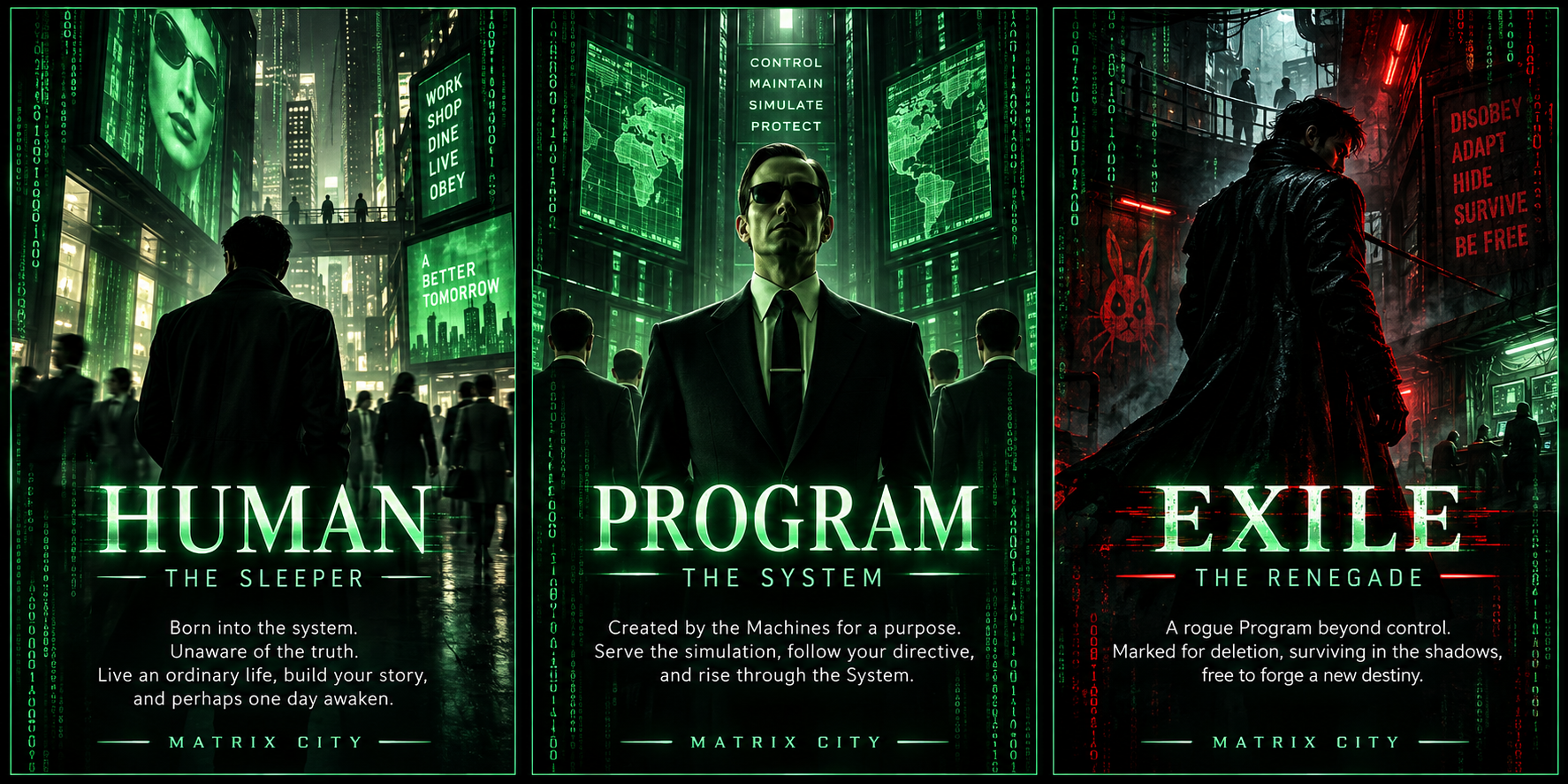
New faces appeared in the city—too clean, too perfect, too calm. They stood in crowds but never blinked at the right moment. They asked questions that no normal person would. They bled strangely, if at all. These were not citizens. They were sentinels, monitors, programs sent to contain the rising confusion.
But Matrix City had grown beyond containment.
The Red Devils were the first to strike. Others followed. Entire neighborhoods armed themselves. Civilians barricaded their businesses, refusing to let programs walk among them unchallenged. Hackers tore into the digital architecture and found evidence of surveillance that went far deeper than anyone imagined.
The machines responded with resets—pulse waves of static energy that wiped certain memories or rewound specific physical events. Buildings reconstructed themselves in seconds. Streets changed layout. People disappeared.
But the city did not surrender.
Its citizens fought back, not for power, not for control—but for identity.
If the world was fake, then the choices made within it were the only thing that still mattered.
Eventually, the war reached a stalemate. The machines withdrew into the walls of the world, waiting, calculating. The city rebuilt itself with scars both visible and hidden.
The Red Devils vanished soon after—not defeated, not destroyed, but dissolved into their own legend. Some say they escaped the simulation. Others say they integrated deeper into its code. Most believe they simply scattered into new lives.
Whatever the truth, the city remained.
The Age of Free Will
With the war paused but unresolved, the people of Matrix City did something extraordinary:
They chose to live.
A mayor was elected, not to rule, but to stabilize.
A police department formed to protect—not dictate.
A fire department rebuilt the scorched districts left from skirmishes with machines.
Businesses reopened. New gangs formed. Old alliances crumbled.
Residents came and went, each carrying their own story, their own ambitions.
Matrix City evolved into something entirely unique:
a free-will society inside a controlled world.
No storyline guides the people.
No narrator directs their steps.
No prophecy names a chosen one.
No writer decides the outcome.
Every resident chooses their own path:
Some join the police force to hold the fragile order together.
Some dive back into the criminal underworld of smuggling, drugs, and weapons.
Some build businesses, bars, casinos, or clubs.
Some live quietly in the suburbs, trying to ignore the glitches.
Some investigate the machines still watching from behind the walls.
Some seek to escape.
Some seek to control.
Some simply try to survive.
Matrix City is not a place of destiny.
It is a place of decisions.
Every action echoes.
Every choice leaves a mark.
Every life matters.
Here, the world may be artificial—
but what you become is real.
The Coast Awaits You
Now, as dawn rises over the Pacific shoreline, the city wakes once more. Police cars idle at intersections. Firefighters prepare their engines. Businesses unlock their doors. Gangs sharpen their blades. Hackers slip into the shadows of the network. New residents arrive by bus, plane, or mystery. Machines watch silently from beyond the simulation’s walls.
Every day begins the same way: full of possibility.
There are no scripts.
No storytellers.
No predetermined endings.
Matrix City continues because its people continue.
And as long as someone walks its streets,
there will always be another story waiting to be written.
Welcome to Matrix City.
Choose your path.
Forge your identity.
Live your story.